
Inverse Problems & Digital Twins
From Images to Material Fields
In many engineering systems, the quantities we care about most — material parameters, defects, internal stresses — are not directly measurable. Instead, we observe system responses (displacements, temperature fields, strain maps) and solve an inverse problem to infer the underlying parameters.
My research focuses on high-dimensional inverse problems, where the unknown is not a single number, but a spatially varying field that parametrizes a partial differential equation.
This setting is essential for modern manufacturing:
if we want to detect non-conformities, voids, or heterogeneous bonding regions, the parameter space must be rich enough to represent them.
These problems are inherently ill-posed. To address this, we develop function-space formulations with principled regularization and scalable Newton–Krylov solvers that remain consistent in the infinite-dimensional limit.
∞–IDIC: Infinite-Dimensional Integrated Digital Image Correlation
We developed ∞–IDIC, an infinite-dimensionally consistent formulation of Integrated Digital Image Correlation.
Traditional DIC methods estimate displacement fields and then post-process them to infer material properties. In contrast, ∞–IDIC directly inverts for spatially varying material parameters by coupling:
- Image data
- Governing PDEs of elasticity
- Function-space regularization
The result is a scalable algorithm capable of recovering heterogeneous modulus fields from static loading experiments.
This enables:
- Non-destructive identification of material heterogeneity
- Discovery of voids and non-conformities
- Inference of modulus-induced stress fields
- A pathway toward mechanics-aware digital twins
For more details, see our preprint and technology disclosure:
Example: Recovering a Spatial Modulus Field
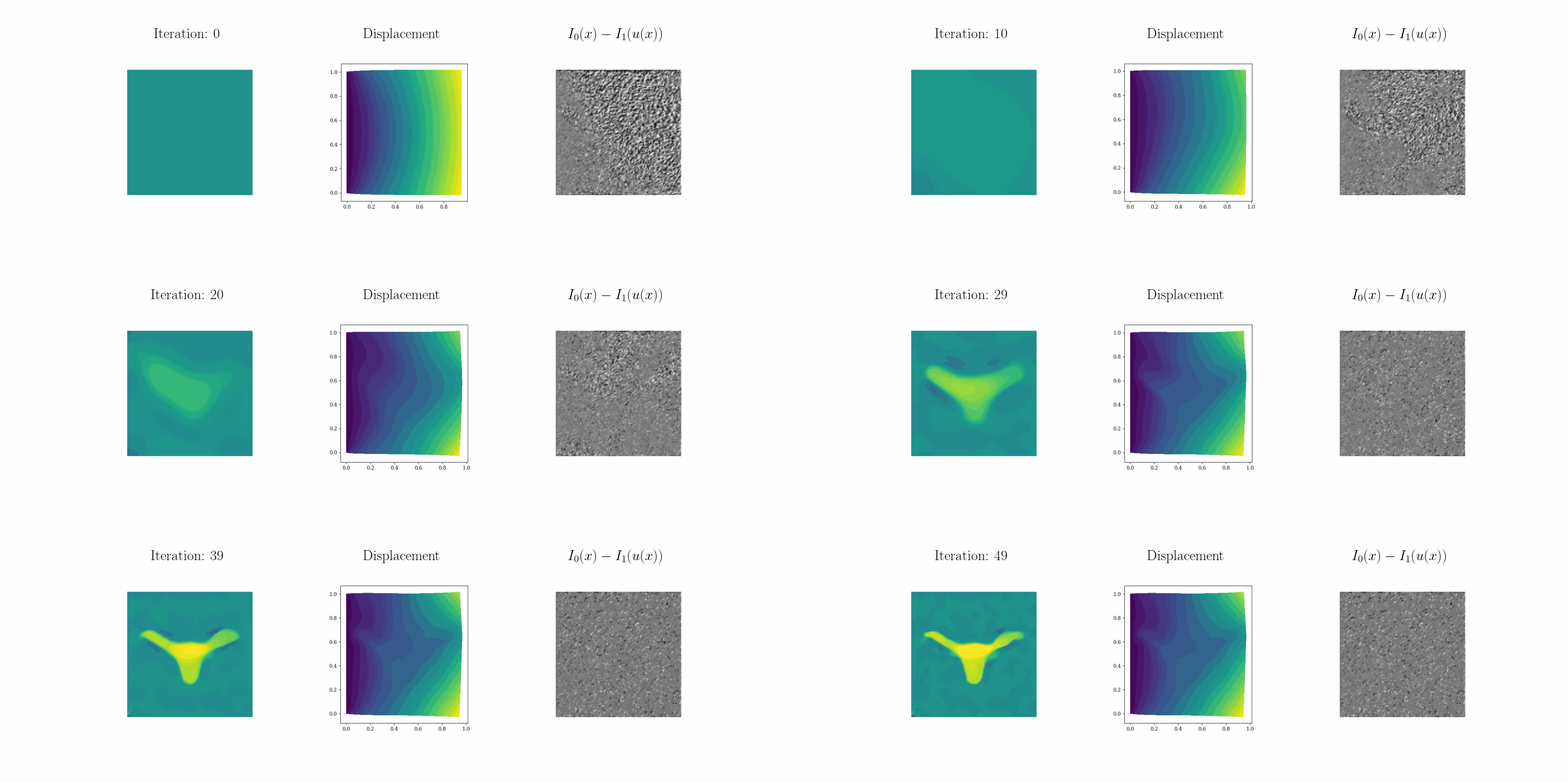
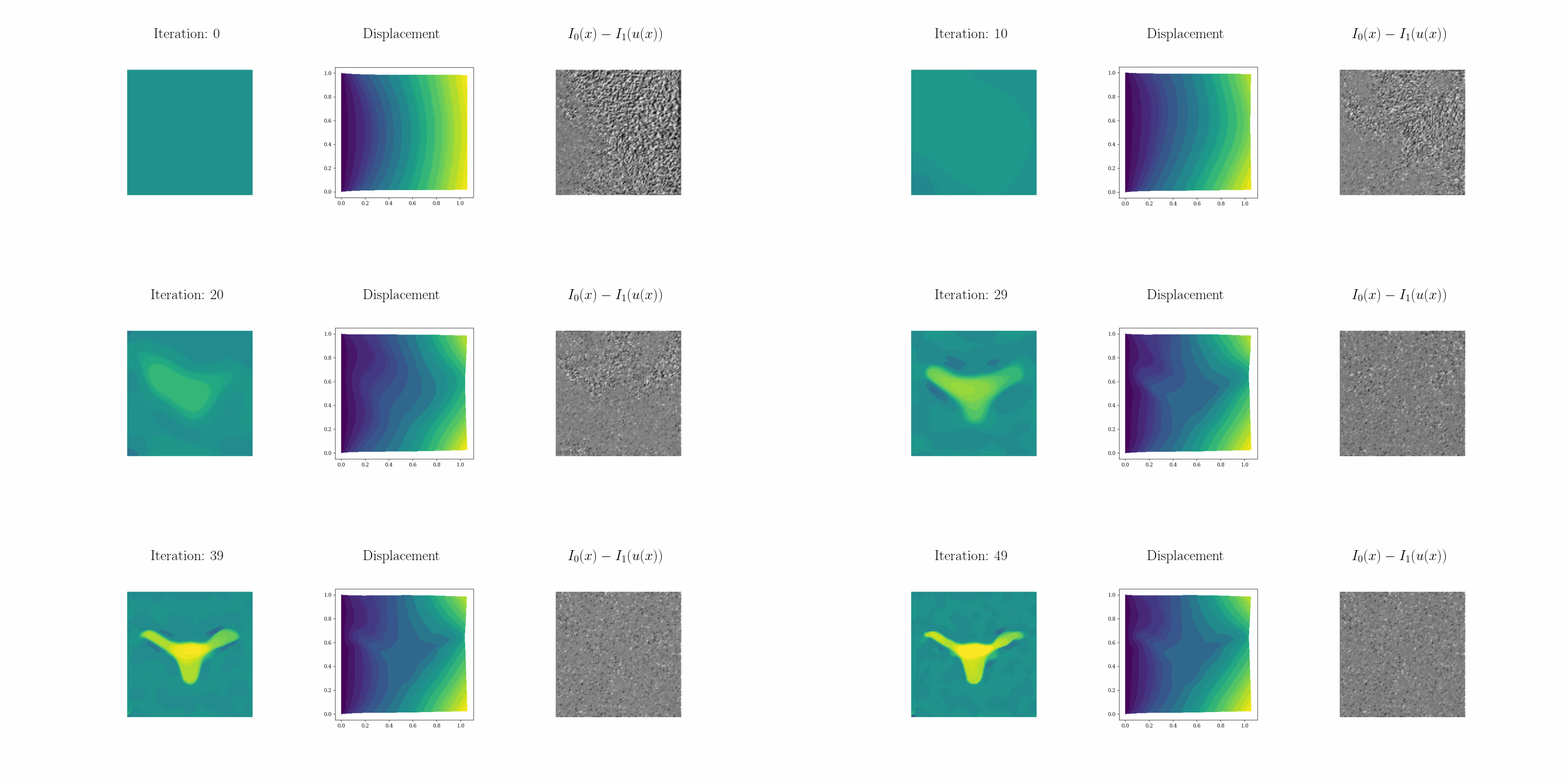
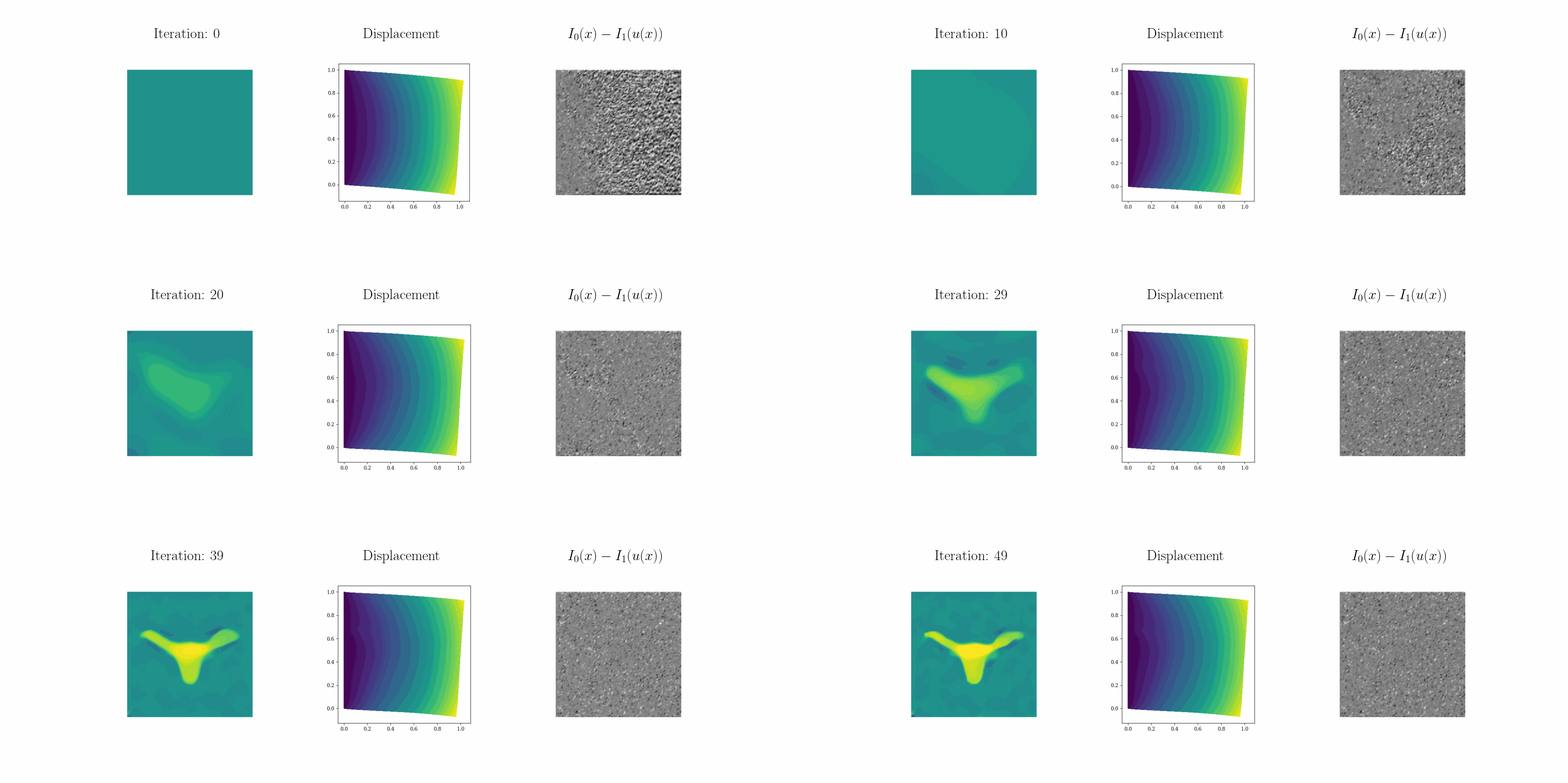
Below, ∞–IDIC reconstructs a spatially varying elastic modulus profile (Bevo-shaped) from four different static loading configurations.
Compression
Tension
Bending (Down)
Bending (Up)
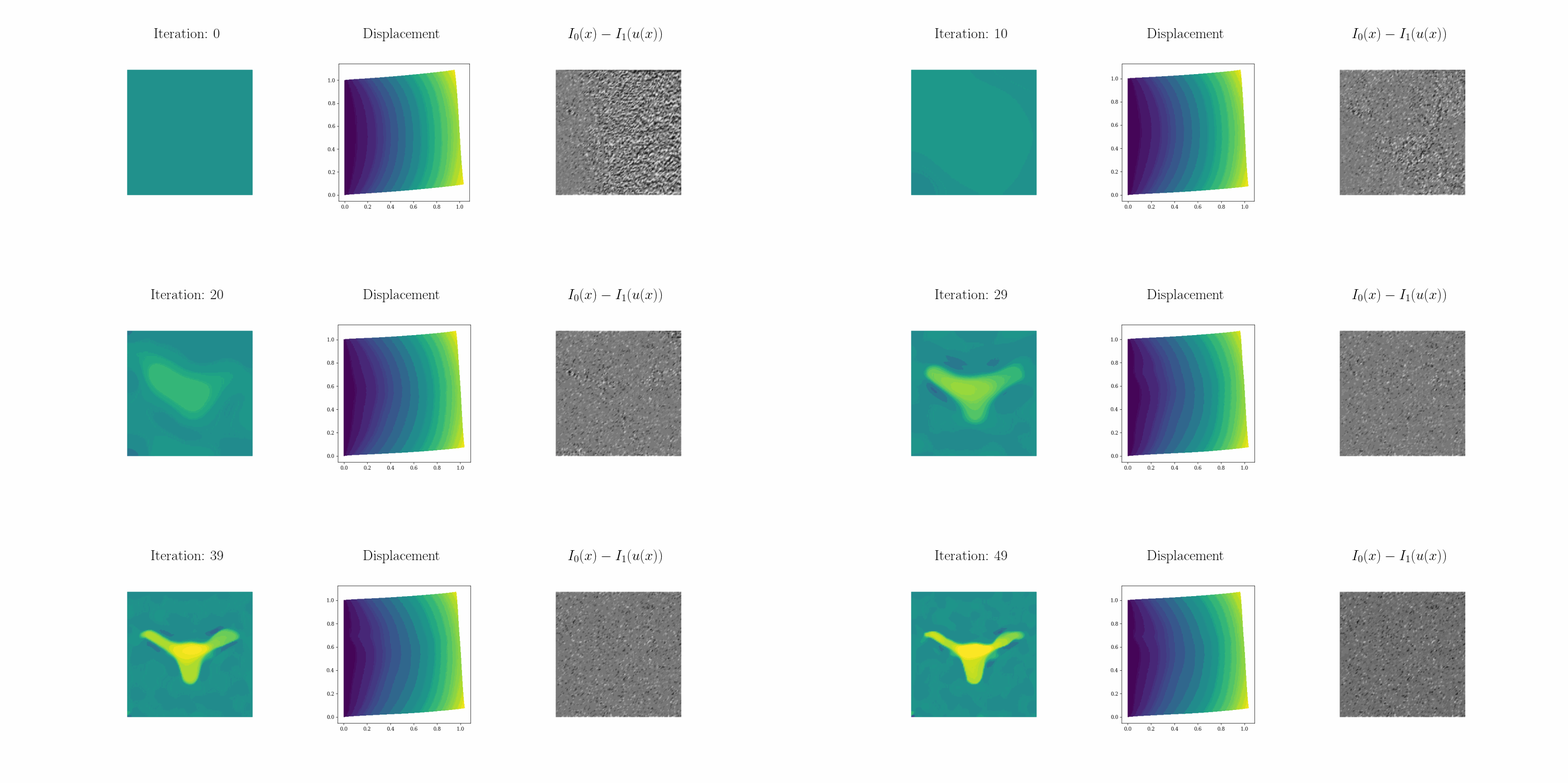
Across loading conditions, the method consistently reconstructs the underlying heterogeneous field — demonstrating robustness and physics consistency.
Toward Manufacturing Digital Twins
The long-term goal is to integrate these inverse methods into real manufacturing workflows.
By combining:
- High-resolution experimental measurements (SEM-DIC, micro-scale testing)
- Bayesian uncertainty quantification
- Neural-operator surrogates for accelerated PDE solves
we move toward real-time, mechanics-aware digital twins for thermoplastic composite manufacturing.
Inverse problems are not just a computational tool in this framework — they are the bridge between experiments and predictive manufacturing systems.